
Demystifying the NIST Cybersecurity Framework: A Strategic Guide for Businesses
In a world where cyber risks evolve faster than most organizations can keep up, the NIST Cybersecurity Framework (CSF) remains a cornerstone of modern cybersecurity strategy.
Developed by the National Institute of Standards and Technology, the framework offers a flexible, risk-based approach to cybersecurity that applies across industries—from fintech and SaaS to healthcare and government. Whether you’re pursuing a certification, building a security program from scratch, or strengthening what you already have, NIST CSF offers both clarity and structure.
Overview of the NIST Cybersecurity Framework
Introduced in 2014, the NIST CSF was created to help critical infrastructure providers manage and reduce cybersecurity risk. Today, it’s a widely adopted standard for organizations of all sizes and sectors.
The framework is structured around five core functions:
-
Identify: Understand your business context, assets, and risk environment
-
Protect: Develop safeguards to ensure service delivery
-
Detect: Identify cybersecurity events quickly and effectively
-
Respond: Take action regarding detected incidents
-
Recover: Maintain resilience and restore capabilities
These five functions provide a comprehensive lifecycle approach that adapts to any security maturity level.
Real-World Challenges With NIST Implementation
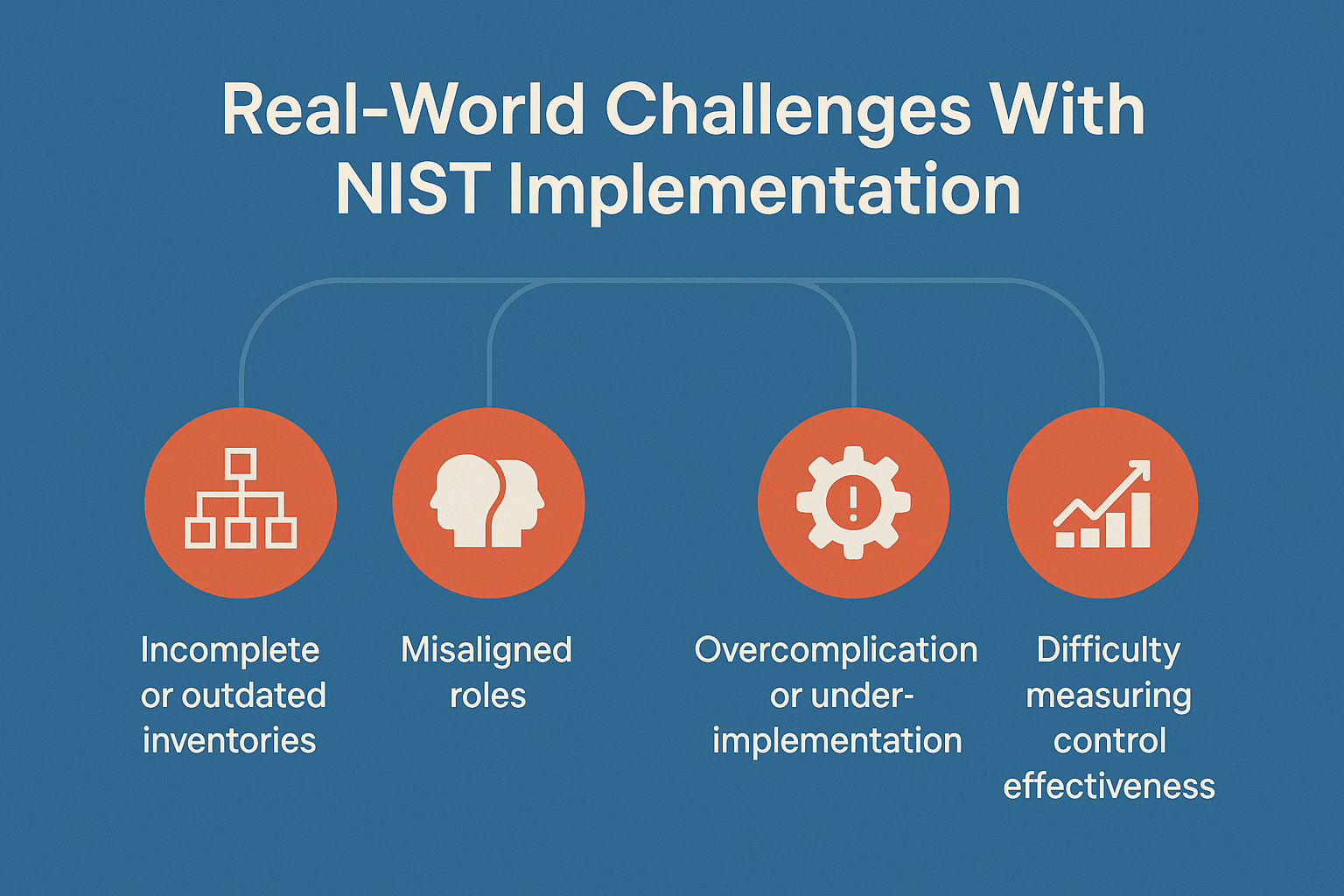
Despite its flexibility, many businesses struggle with NIST due to:
-
Incomplete or outdated asset inventories
-
Misaligned roles between IT, DevOps, and Compliance
-
Overcomplication or under-implementation
-
Difficulty measuring control effectiveness
We’ve worked with fast-growing companies that delayed audits or failed vendor reviews because NIST wasn’t operationalized. Our delivery model is designed to avoid these pitfalls.
Business Benefits of Adopting NIST CSF
Implementing the NIST Cybersecurity Framework helps you:
-
Establish structured, visible risk governance
-
Simplify audit prep across multiple standards
-
Boost third-party trust (customers, partners, regulators)
-
Stay future-ready for new threats and regulations
NIST is more than best practice—it’s a competitive advantage when implemented well.
Win GRC’s Approach to NIST Alignment
At Win GRC, we don’t view NIST CSF as a static checklist—we view it as a strategic blueprint for managing digital risk.
By aligning clients to NIST CSF, we enable:
-
Crosswalks to other frameworks like SOC 2, ISO 27001, and HIPAA
-
Scalable maturity tracking for startups and enterprises
-
Integration with GRC tools and ticketing systems
-
Measurable improvement and board-level transparency
We routinely map NIST CSF to:
-
SOC 2 Trust Services Criteria
-
ISO 27001 Annex A
-
HIPAA Security Rule
-
CIS Controls
Our mission is to make your cybersecurity posture more mature, defensible, and audit-aligned.
Implementing NIST with Win GRC
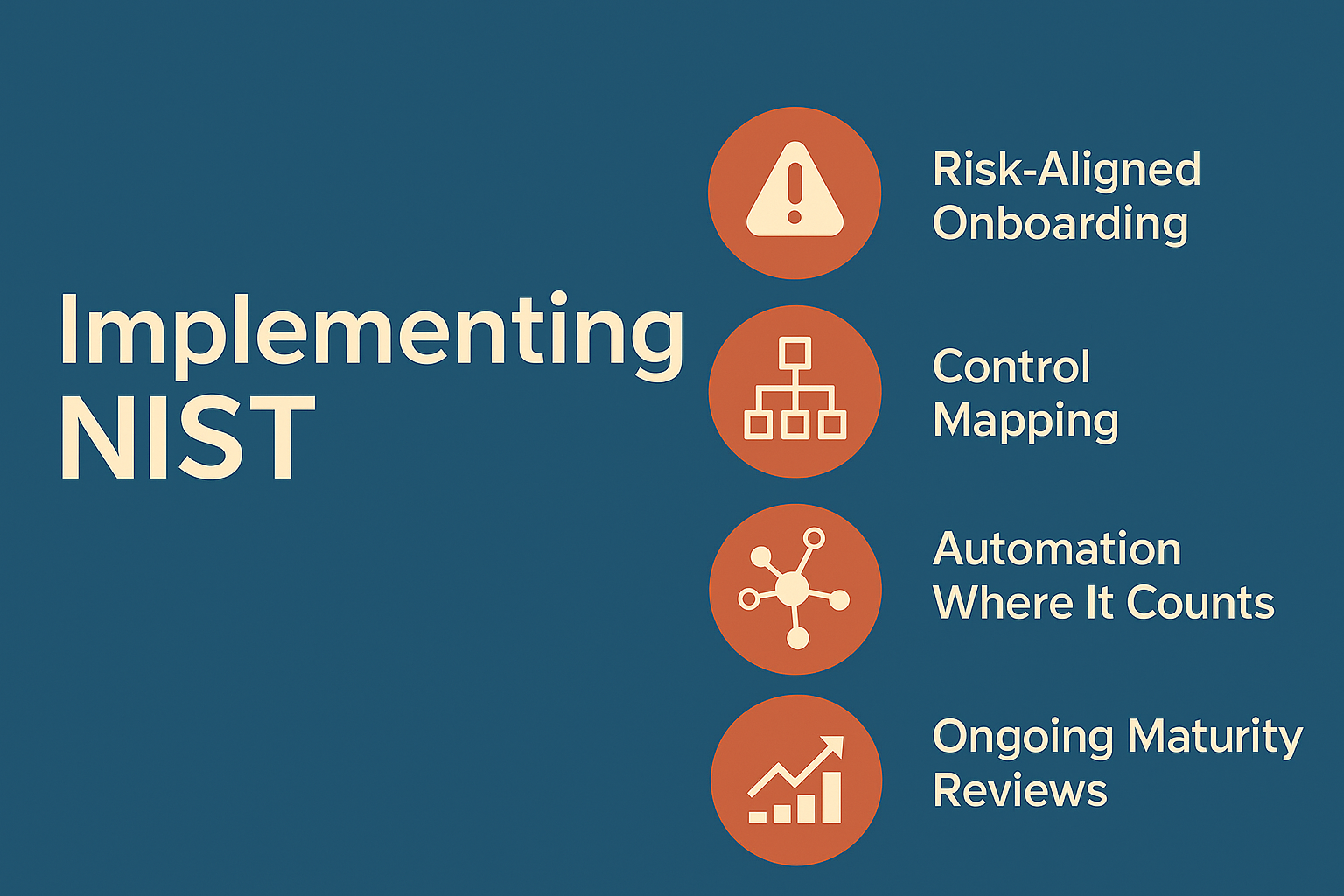
Here’s how we bring NIST CSF to life for your business:
- Risk-Aligned Onboarding
Every engagement starts with understanding your business, threats, and stakeholders.
- Control Mapping
We tie your policies, tech stack, and procedures directly to NIST functions and categories.
- Automation Where It Counts
Using AI-enhanced tooling or integration with platforms like Jira, Drata, or your internal systems, we minimize manual effort.
- Ongoing Maturity Reviews
Security doesn’t stop once controls are in place. We help you iterate and improve over time.
Our approach ensures NIST becomes embedded in your operating rhythm, not just a documentation layer.
Final Thoughts: Building Long-Term Resilience with NIST
The NIST Cybersecurity Framework isn’t just about meeting today’s standards—it’s about preparing for tomorrow’s threats. Its flexibility and risk-based approach make it a powerful ally for organizations seeking to scale securely in a rapidly evolving digital world.
At Win GRC, we believe that frameworks like NIST should be operationalized—not just documented. Whether you’re a startup aiming for your first audit or an enterprise optimizing existing controls, our team is here to help you translate NIST into clear, actionable, and measurable outcomes.
We combine deep regulatory knowledge with hands-on engineering experience to ensure that your cybersecurity program is not only compliant—but resilient, adaptable, and business-aligned.